
Every Step Shouldn’t Be a Reminder That Something Hurts
You probably don't think much about your feet and ankles when they're working well.
But when something starts hurting, you notice it constantly.
Walking through the grocery store. Standing at work. Exercising. Hiking. Running. Even taking those first few steps after getting out of bed can become uncomfortable.
For people searching for foot and ankle pain treatment in Loveland, Colorado, SoftWave Therapy may be considered as part of a personalized, non-invasive treatment plan for certain musculoskeletal conditions.
The goal is simple: identify what's contributing to your symptoms and help you work toward moving comfortably again.
Why Is Foot and Ankle Pain So Common?
Your feet absorb and transfer forces every time you stand, walk, run, or jump.
For active people, those forces can add up quickly.
Potential contributors to foot and ankle problems include:
Running
Hiking
Prolonged standing
Sudden increases in activity
Repetitive exercise
Previous ankle injuries
Limited mobility
Changes in footwear
Sports
Physically demanding jobs
Insufficient recovery
Because numerous structures can produce similar symptoms, determining exactly what's causing your pain is important before beginning treatment.
Common Foot and Ankle Problems
Plantar Fasciitis
Plantar fasciitis is commonly associated with heel pain, particularly during the first steps after getting out of bed or following extended periods of inactivity.
Achilles Tendinopathy
The Achilles tendon connects the calf muscles to the heel and experiences substantial loads during walking, running, jumping, and climbing.
Chronic Tendon Problems
Several tendons around the ankle help control movement and stability. Repetitive loading or previous injuries may contribute to persistent tendon-related discomfort.
Overuse Injuries
Running, hiking, recreational sports, and physically demanding work can expose the foot and ankle to repetitive stress.
Not every type of foot or ankle pain is appropriate for SoftWave Therapy. That's why a professional evaluation should come first.
What Is SoftWave Therapy?
SoftWave Therapy uses acoustic waves delivered externally through the skin into targeted tissues.
These waves create mechanical stimulation intended to encourage biological responses associated with normal tissue repair.
Research involving extracorporeal shock wave therapy has investigated effects involving:
Local circulation
Collagen remodeling
New blood vessel formation
Cellular responses associated with tissue repair
Pain signaling
Shock wave therapy has been particularly studied for certain chronic tendon and plantar fascia conditions.
Individual outcomes vary, and SoftWave Therapy isn't a universal treatment for every foot or ankle problem.
Why Active Coloradans Pay Attention to Foot Health
Living in Northern Colorado means opportunities for activity are everywhere.
Maybe you're hiking on the weekend.
Maybe you're training for your next race.
Maybe you're playing pickleball several times per week.
Or maybe your job simply requires being on your feet for eight hours every day.
When your foot or ankle hurts, nearly all of those activities become more difficult.
That's why treatment shouldn't focus only on making the area temporarily feel better.
It should consider what you're trying to get back to doing.
SoftWave Therapy for Runners
Runners repeatedly load the feet, ankles, Achilles tendons, and lower legs.
When symptoms appear, runners sometimes make one of two mistakes:
They completely ignore the problem and continue training normally.
Or they completely stop running without developing a plan for returning.
Depending on the injury, a more structured approach may involve temporarily modifying mileage while addressing:
Lower-leg strength
Ankle mobility
Calf capacity
Training volume
Recovery
Previous injuries
Running demands
SoftWave Therapy may be incorporated when appropriate for the specific condition.
SoftWave Therapy for Hikers
Colorado hiking presents its own challenges.
Long climbs require repeated calf and Achilles loading, while descending places different demands on the feet, ankles, and knees.
If foot or ankle pain has started determining which trails you can handle—or whether you hike at all—it may be worth having the problem evaluated.
The objective isn't simply getting through your next hike.
It's building enough strength and capacity to continue enjoying the outdoors.
Why Rest Doesn't Always Fix Persistent Foot Pain
Rest can reduce the amount of stress placed on an irritated area.
That can make symptoms feel better.
But if the tissue hasn't regained the capacity required for your normal activities, discomfort may return as soon as activity increases again.
That's why rehabilitation may remain important even when symptoms begin improving.
Depending on your condition, treatment could involve:
SoftWave Therapy
Calf strengthening
Foot strengthening
Ankle mobility
Balance exercises
Progressive tendon loading
Chiropractic care
Activity modification
Gradual return to exercise
The exact strategy should be based on your individual diagnosis.
What Happens During a SoftWave Treatment?
Your provider begins by evaluating your symptoms and determining whether SoftWave Therapy is appropriate.
If recommended:
Conductive gel is applied to the targeted area.
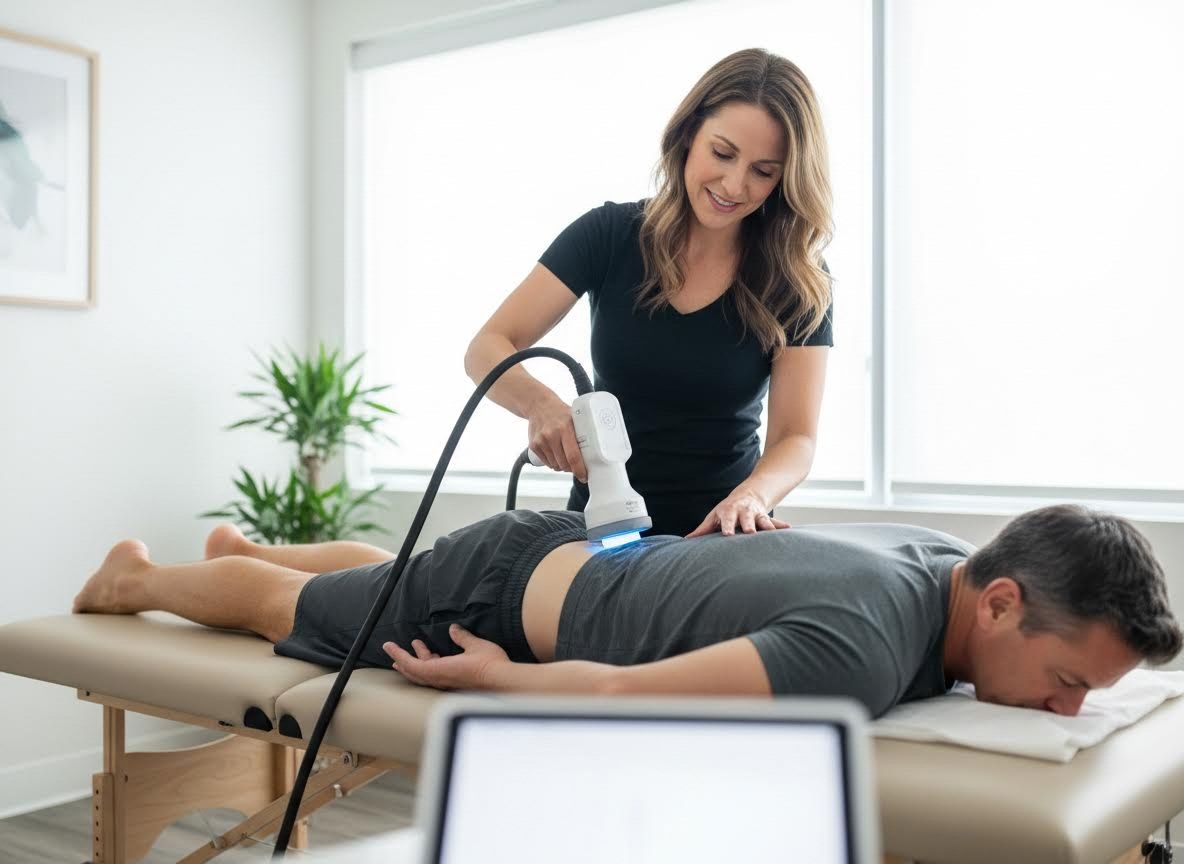
A handheld applicator delivers acoustic waves through the skin.
Your provider identifies and treats appropriate areas.
Your response is monitored throughout the session.
Additional rehabilitation recommendations may be discussed.
SoftWave Therapy is performed externally and doesn't require surgical incisions.
When Should Foot or Ankle Pain Be Evaluated?
Consider scheduling an evaluation if:
Heel pain keeps returning
Your first steps in the morning are uncomfortable
Running consistently causes symptoms
Your Achilles feels repeatedly stiff
Hiking has become difficult
Standing at work aggravates the problem
You've changed how you walk because of pain
Symptoms have persisted for several weeks
Rest helps, but pain returns with activity
Sudden severe pain, significant swelling, deformity, inability to bear weight, or symptoms following a serious injury should receive prompt medical attention.
Frequently Asked Questions
Can SoftWave Therapy help plantar fasciitis?
Extracorporeal shock wave therapy has been studied extensively for persistent plantar heel pain and plantar fasciitis. Whether it's appropriate for you depends on your individual condition.
Can SoftWave Therapy be used around the Achilles tendon?
Shock wave therapy has also been studied for Achilles tendinopathy. Your provider should evaluate the tendon and determine whether treatment is appropriate.
Does SoftWave Therapy involve injections?
No. Acoustic waves are delivered externally through the skin.
Can I continue walking and exercising?
That depends on your condition. Your provider may recommend continuing certain activities while temporarily modifying others.
How many treatments will I need?
There isn't one treatment schedule for everyone. Recommendations depend on your diagnosis, symptom duration, activity level, and response to care.
Foot and Ankle SoftWave Therapy in Loveland, Colorado
Your feet are the foundation for almost everything you do.
When persistent discomfort starts limiting walking, working, exercising, or enjoying Colorado's outdoors, continually ignoring the problem may only make your routine more frustrating.
If you're searching for SoftWave Therapy for foot and ankle pain in Loveland, Colorado, an evaluation can help determine what's causing your symptoms and whether SoftWave Therapy may be an appropriate component of your care.
Schedule a SoftWave Consultation in Loveland
Don't let every step become a reminder that something isn't right.
Schedule a consultation at our Loveland clinic to explore your conservative treatment options and determine whether SoftWave Therapy may fit into your personalized recovery plan.
Move comfortably. Stay active. Get back on your feet.