
When Knee Pain Starts Getting in the Way
Your knees are involved in almost everything you do—walking, climbing stairs, working, exercising, hiking, and simply getting out of a chair.
When knee discomfort becomes persistent, those everyday movements can become increasingly frustrating.
For people searching for knee pain treatment in Loveland, Colorado, SoftWave Therapy is a non-invasive option that may be incorporated into a personalized conservative care plan.
SoftWave Therapy uses acoustic wave technology designed to stimulate biological responses in targeted tissues and support the body's natural healing processes.
Why Does Knee Pain Happen?
Knee discomfort can develop for many different reasons. Some problems appear suddenly following an injury, while others develop gradually after months or years of repetitive activity.
Common contributors can include:
Overuse
Running and jumping
Previous injuries
Tendon irritation
Repetitive movements
Physically demanding jobs
Changes in mobility
Training too aggressively
Age-related changes
Because there are many potential causes of knee pain, determining what's actually contributing to your symptoms is an important first step.
What Is SoftWave Therapy?
SoftWave Therapy is a form of extracorporeal shock wave therapy that delivers acoustic waves through the skin into targeted tissues.
These waves create mechanical stimulation that may encourage biological responses associated with tissue repair and recovery.
Research into shock wave therapy has examined potential effects involving:
Local circulation
New blood vessel formation
Collagen remodeling
Cellular activity associated with tissue repair
Pain signaling
Inflammatory processes
Unlike surgery, SoftWave Therapy does not require incisions or anesthesia.
Why Consider SoftWave for Knee Pain?
For appropriate patients, SoftWave Therapy may provide another conservative option before more invasive treatments are considered.
Patients often appreciate that SoftWave Therapy is:
Non-invasive
Drug-free
Performed in-office
Relatively quick
Easy to incorporate into a broader rehabilitation program
Associated with minimal interruption to everyday routines for many patients
It is important to remember that not every type of knee pain is appropriate for SoftWave Therapy. Your provider should first evaluate the underlying condition.
Knee Problems in Active Colorado Adults
Northern Colorado makes staying active easy.
Running, hiking, skiing, cycling, weightlifting, pickleball, and recreational sports all place different demands on the knees.
Repeated stress can sometimes contribute to irritation of the muscles, tendons, and other tissues surrounding the joint.
For someone who wants to remain active, the goal isn't necessarily to stop moving altogether. Instead, a personalized treatment and rehabilitation plan may help address the problem while supporting a safe return to activity.
SoftWave Therapy for Runners
Running places repeated forces through the lower body.
When training volume increases too quickly or recovery isn't adequate, runners may begin experiencing discomfort around the knee.
A comprehensive evaluation can look at factors such as:
Training volume
Hip mobility
Ankle mobility
Muscle strength
Running mechanics
Previous injuries
SoftWave Therapy may then be incorporated into a larger treatment strategy when clinically appropriate.
SoftWave Therapy for Weightlifters
Squats, lunges, leg presses, and other lower-body exercises place substantial demands on the knees.
That doesn't necessarily make these exercises bad. In fact, appropriate strength training can be an important part of maintaining healthy movement.
However, repetitive loading combined with poor recovery or an existing injury may contribute to persistent symptoms.
Rather than simply avoiding leg training indefinitely, identifying the source of the problem can help create a more appropriate recovery plan.
What Happens During a SoftWave Treatment?
Before treatment begins, your provider will evaluate your knee and discuss your symptoms.
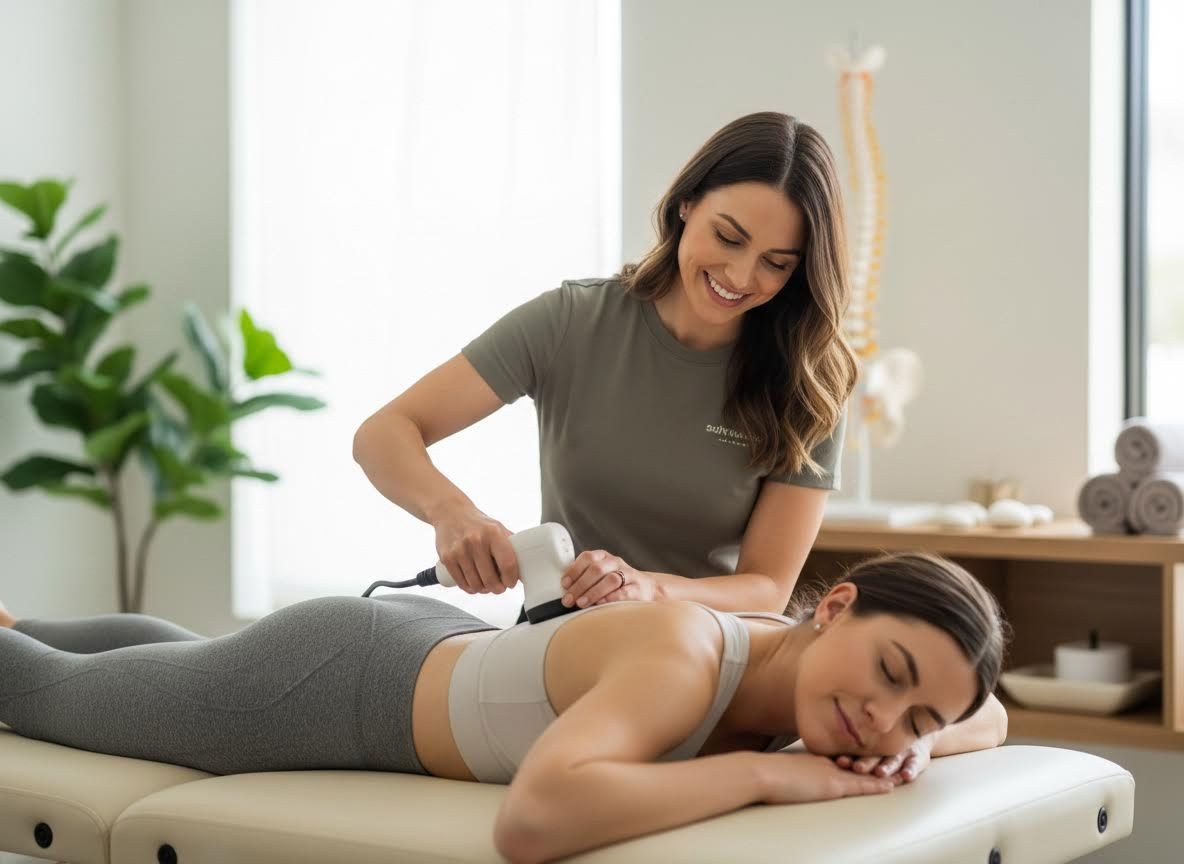
If SoftWave Therapy is appropriate, conductive gel is applied to the treatment area before a handheld applicator delivers acoustic waves into targeted tissues.
Your provider can adjust treatment based on the area being addressed and your response.
Sessions are generally brief and performed directly in the clinic.
Combining SoftWave Therapy With Rehabilitation
SoftWave Therapy doesn't have to be used alone.
Depending on your condition, your provider may combine treatment with:
Chiropractic care
Strengthening exercises
Mobility training
Stretching
Soft tissue techniques
Movement retraining
Activity modifications
For many musculoskeletal problems, improving strength and movement patterns remains an important part of long-term recovery.
Signs It's Time to Have Your Knee Evaluated
Consider having persistent knee discomfort evaluated if:
Pain continues for several weeks
Stairs have become uncomfortable
Squatting causes discomfort
Running consistently aggravates your knee
Your knee limits your workouts
You've stopped activities you previously enjoyed
Symptoms repeatedly disappear and return
Sudden severe pain, significant swelling, inability to bear weight, or symptoms following a serious injury should receive prompt medical evaluation.
Frequently Asked Questions
Can SoftWave Therapy eliminate knee pain?
No treatment can guarantee a specific outcome. Results depend on the underlying condition and individual patient. SoftWave Therapy may be one component of a broader conservative treatment program for appropriate patients.
How long does treatment take?
SoftWave sessions are generally relatively short. Exact treatment times and protocols vary depending on the condition and provider.
Will I need multiple sessions?
Some treatment plans involve multiple visits. Your provider will make recommendations based on your evaluation and response to care.
Can SoftWave Therapy be combined with chiropractic treatment?
Yes. When appropriate, SoftWave Therapy may be incorporated alongside chiropractic care, rehabilitation exercises, mobility work, and other conservative therapies.
Knee Pain Treatment in Loveland, Colorado
Your knees shouldn't automatically force you to give up the activities you enjoy.
If you've been searching for SoftWave Therapy for knee pain in Loveland, Colorado, an evaluation can help determine what's contributing to your symptoms and whether SoftWave Therapy is an appropriate option.
The objective is bigger than temporary relief. It's about helping you improve function, restore movement, and confidently return to the activities that matter to you.
Schedule a SoftWave Consultation in Loveland
Whether you're a runner, weightlifter, weekend hiker, active parent, or simply want to move more comfortably, persistent knee pain deserves attention.
Schedule a consultation at our Loveland clinic to learn whether SoftWave Therapy may be appropriate for your individual treatment plan.
Don't just work around your knee pain. Find out what's causing it and start working toward better movement.