
Shoulder pain has a way of showing up everywhere.
Reaching overhead, lifting weights, carrying groceries, working at a desk, sleeping on your side, or simply putting on a jacket can become uncomfortable when your shoulder isn't moving the way it should.
For people looking for a non-invasive shoulder pain treatment in Loveland, Colorado, SoftWave Therapy offers an option designed to support the body's natural healing and recovery processes.
At Source Studio in Loveland, SoftWave Therapy can be incorporated into a personalized treatment plan for certain musculoskeletal injuries and areas of persistent discomfort.
Why Shoulder Pain Can Be So Frustrating
The shoulder is one of the most mobile joints in the body.
That mobility allows us to push, pull, lift, throw, reach, and rotate our arms through a wide range of motion.
But it also means that numerous muscles, tendons, ligaments, and other structures have to work together properly.
Shoulder discomfort may be associated with:
Repetitive movements
Sports injuries
Weight training
Overuse
Tendon irritation
Rotator cuff problems
Previous injuries
Limited shoulder mobility
Muscle strains
Everyday wear and tear
When discomfort persists, people often begin avoiding certain movements entirely.
That can eventually interfere with exercise, work, sleep, hobbies, and everyday life.
What Is SoftWave Therapy?
SoftWave Therapy uses acoustic waves that are delivered into targeted areas of the body.
These waves are designed to stimulate a biological response within the treatment area and support the body's natural healing mechanisms.
Rather than simply covering up discomfort, SoftWave is designed to encourage activity within the tissue itself.
Depending on the condition being treated, SoftWave Therapy may help support circulation, tissue repair, mobility, and the body's natural recovery response.
Most importantly for many patients, treatment is non-invasive.
There are no surgical incisions involved.
SoftWave Therapy for Shoulder and Rotator Cuff Discomfort
Rotator cuff problems are a common source of shoulder discomfort.
The rotator cuff consists of muscles and tendons that help stabilize and move the shoulder. Repetitive overhead activity, sports, weightlifting, physical occupations, or general wear can place significant stress on these tissues.
When the area becomes irritated, movements that were once effortless may suddenly become uncomfortable.
You might notice discomfort while:
Reaching above your head
Bench pressing
Performing shoulder exercises
Throwing
Reaching behind your back
Sleeping on the affected shoulder
Picking up objects
Performing repetitive work
SoftWave Therapy can be applied to targeted areas around the shoulder to stimulate the body's natural recovery processes.
Why Active Adults Are Exploring SoftWave Therapy
For active people, being told to simply stop doing everything that hurts isn't always a satisfying long-term solution.
The objective is often to identify what's contributing to the problem, support recovery, and gradually return to normal movement.
SoftWave Therapy is especially appealing because treatments are relatively quick and don't typically require the extended downtime associated with more invasive procedures.
That can make it an option worth discussing for athletes, gym-goers, outdoor enthusiasts, physically demanding professionals, and other active adults.
What Happens During a SoftWave Treatment?
SoftWave treatments are relatively simple from the patient's perspective.
Your provider identifies the area being treated and applies conductive gel to the skin.
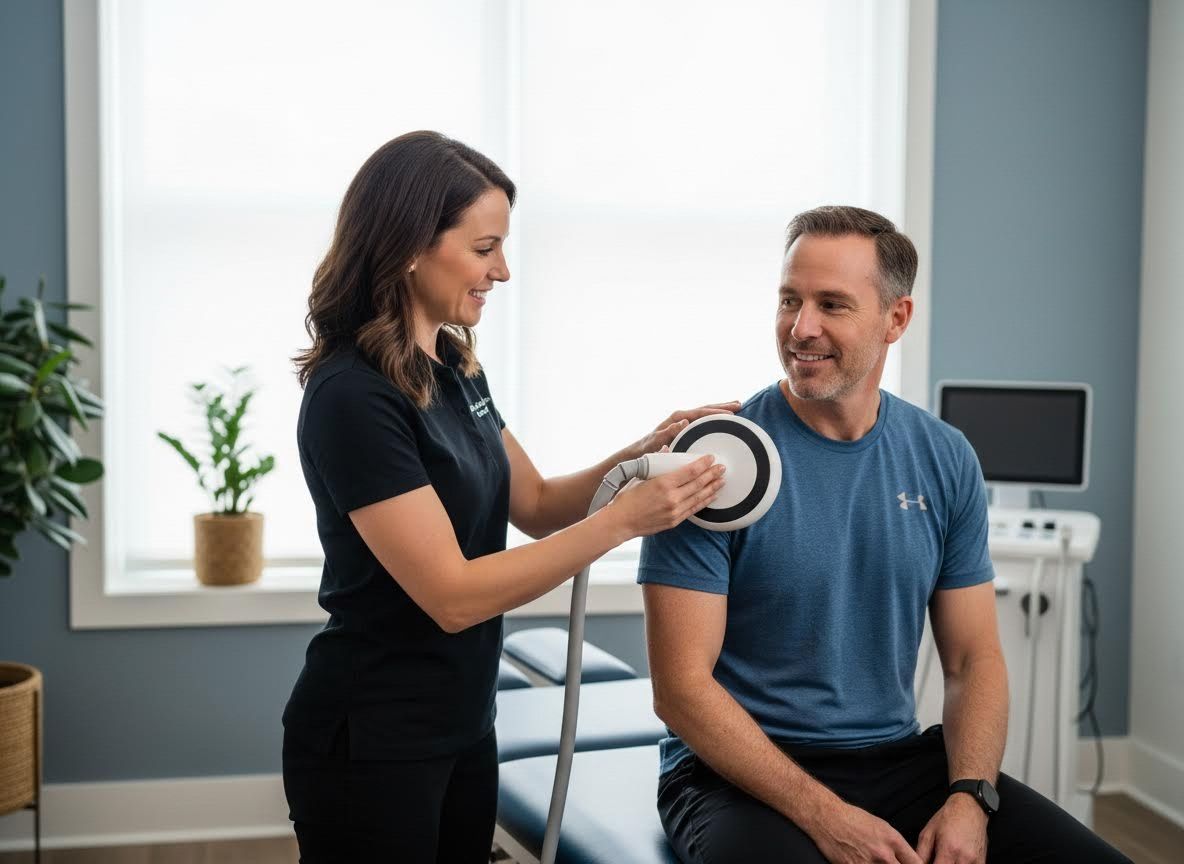
A handheld SoftWave applicator is then moved across the treatment area while acoustic waves are delivered into the tissue.
You may feel a tapping or pulsing sensation.
Some locations may feel more sensitive than others, particularly around areas of irritated or injured tissue.
The provider can adjust treatment based on your comfort and response.
How Long Does SoftWave Therapy Take?
You don't have to dedicate an entire afternoon to treatment.
SoftWave sessions at Source Studio are typically approximately 10–15 minutes.
There is generally no required downtime after treatment, making appointments easier to fit into busy schedules.
The number and frequency of treatments can vary depending on the condition, how long you've experienced symptoms, and how your body responds.
Your provider can develop recommendations based on your individual needs.
Shoulder Pain Doesn't Always Stay in the Shoulder
One reason shoulder discomfort can become complicated is that the shoulder doesn't operate independently.
Movement of the shoulder is influenced by the upper back, neck, shoulder blade, muscles, and surrounding joints.
When one area isn't moving correctly, the body can begin compensating.
That's why simply focusing on the exact location where you feel discomfort doesn't always tell the whole story.
At Source Studio, SoftWave Therapy can be incorporated into a broader approach to movement and wellness when appropriate.
Depending on your needs, care may also include chiropractic services, massage therapy, acupuncture, and other treatments.
Can SoftWave Help With an Old Shoulder Injury?
Persistent problems aren't always caused by a brand-new injury.
Maybe your shoulder started bothering you after an old sports injury.
Maybe you've spent years lifting weights.
Maybe your occupation requires repetitive overhead movements.
Or perhaps you can't remember exactly when the discomfort started.
SoftWave Therapy may be considered for certain chronic musculoskeletal problems as well as more recent injuries.
An evaluation can help determine what's contributing to your symptoms and whether SoftWave is an appropriate option.
Getting Back to the Activities You Enjoy
For many patients, the ultimate goal isn't simply having a shoulder that feels better while sitting still.
It's being able to use it.
That could mean getting back to:
Weightlifting
Golf
Tennis
Pickleball
Swimming
Skiing
Rock climbing
Working comfortably
Playing with your kids
Sleeping without constantly repositioning
Everyday lifting and reaching
Your treatment plan should reflect what you actually want to accomplish.
SoftWave Therapy in Loveland, Colorado
Northern Colorado is an active place to live.
When shoulder discomfort begins interfering with your workouts, hobbies, work, or everyday routine, exploring conservative treatment options can be an important first step.
SoftWave Therapy provides a non-invasive approach designed to stimulate the body's natural healing response and support recovery in targeted tissues.
At Source Studio in Loveland, treatment is personalized around your symptoms, needs, and goals.
Ready to Take the Next Step?
You shouldn't have to constantly plan your movements around a painful shoulder.
If persistent shoulder discomfort is limiting your activity, schedule an appointment with Source Studio in Loveland to learn whether SoftWave Therapy could be an appropriate addition to your treatment plan.
Move freely. Recover confidently. Get back to doing more of what you love.