
When Shoulder Pain Affects Everyday Life
Shoulder pain can make even simple movements frustrating. Reaching into a cabinet, putting on a jacket, lifting weights, sleeping comfortably, or carrying groceries can suddenly become difficult.
For active adults throughout Northern Colorado, shoulder discomfort can also mean spending less time doing the things they enjoy.
If you've been searching for shoulder pain treatment or SoftWave Therapy in Loveland, Colorado, SoftWave Therapy may be one conservative option worth discussing with a qualified healthcare provider.
Why Is the Shoulder So Easy to Irritate?
The shoulder is one of the most mobile joints in the body. That mobility allows you to reach, lift, push, pull, and rotate your arm—but it also means the shoulder depends heavily on surrounding muscles, tendons, and other structures for stability.
Shoulder discomfort may be associated with:
Repetitive overhead movements
Sports and weight training
Physically demanding work
Previous injuries
Tendon irritation
Reduced mobility
Repetitive lifting
Age-related tissue changes
Because shoulder pain can have many causes, identifying the source of your symptoms is important before beginning treatment.
What Is SoftWave Therapy?
SoftWave Therapy uses acoustic waves delivered through the skin into targeted tissues.
These mechanical waves are intended to stimulate biological responses associated with the body's normal healing and repair processes.
Research involving extracorporeal shock wave therapy has examined potential effects on:
Local blood circulation
Collagen remodeling
New blood vessel formation
Cellular responses associated with tissue repair
Pain signaling
Inflammatory processes
SoftWave Therapy is performed without surgical incisions or injections.
Why Consider SoftWave for Shoulder Pain?
Some people with persistent shoulder problems reach a point where rest alone isn't getting them where they want to be.
For appropriate conditions, SoftWave Therapy may be incorporated into a broader conservative care plan focused on restoring movement and function.
Patients often appreciate that treatment is:
Non-invasive
Drug-free
Performed in-office
Relatively quick
Easy to combine with rehabilitation
Designed to support the body's natural recovery processes
SoftWave isn't appropriate for every shoulder condition, so an evaluation should always come first.
Shoulder Pain and Weightlifting
Shoulder discomfort is particularly frustrating for people who enjoy strength training.
Bench presses, overhead presses, pull-ups, lateral raises, and other upper-body exercises place significant demands on the shoulder.
When pain develops, continuing to push through it can sometimes make training increasingly difficult.
A comprehensive evaluation can examine factors such as:
Shoulder range of motion
Strength
Training volume
Exercise technique
Previous injuries
Mobility limitations
Your provider can then develop a treatment and return-to-training plan appropriate for your situation.
It's Not Just Athletes
Shoulder problems can affect almost anyone.
Construction workers, mechanics, healthcare professionals, hairstylists, warehouse employees, office workers, and people who regularly perform repetitive tasks may all experience shoulder discomfort.
Even sleeping positions and everyday activities can become challenging once the shoulder becomes irritated.
The goal of treatment should be to understand what's contributing to the problem—not simply avoid using your shoulder forever.
What Does a SoftWave Treatment Feel Like?
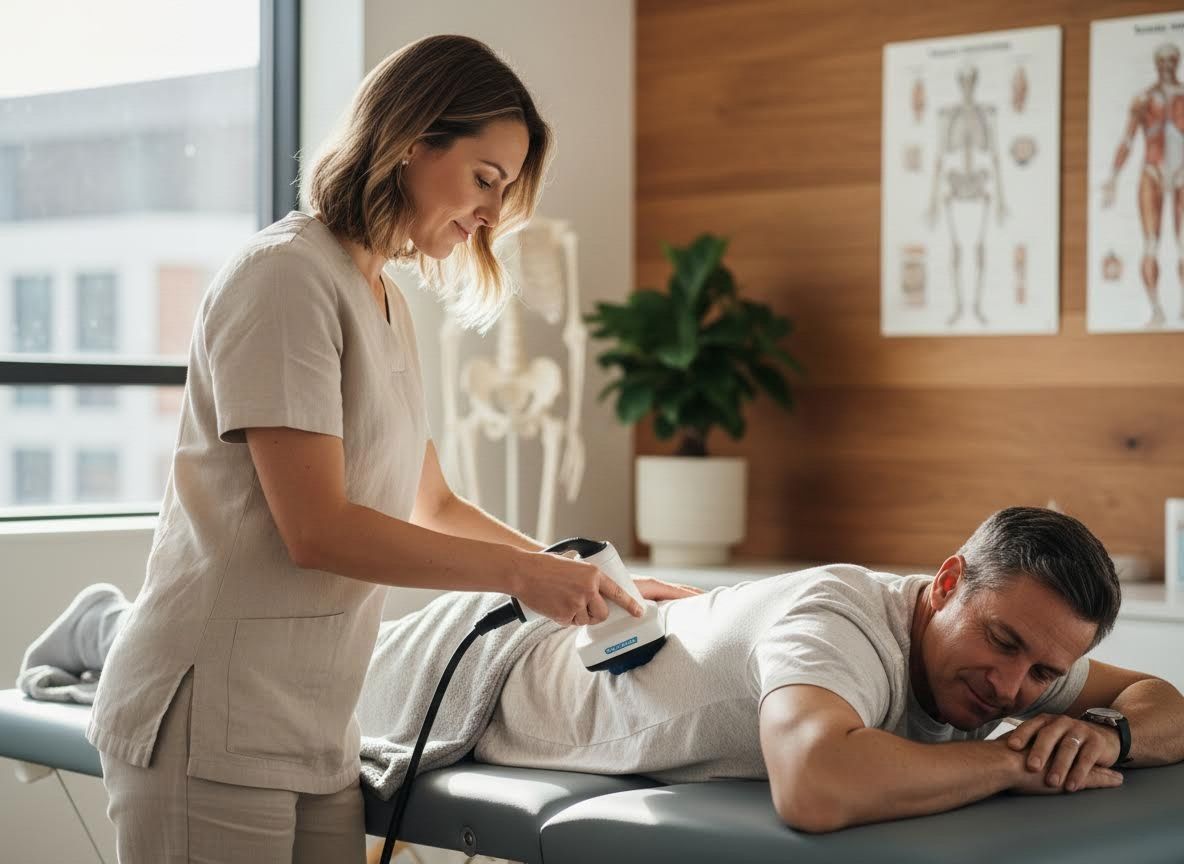
During treatment, a provider applies conductive gel before moving the SoftWave applicator across the targeted area.
Patients typically feel a series of pulses or tapping sensations. Some areas may be more sensitive than others.
Your provider monitors your response throughout treatment and adjusts the application as appropriate.
SoftWave + Chiropractic + Rehabilitation
For many patients, addressing shoulder problems requires more than a single approach.
A personalized care plan may incorporate:
SoftWave Therapy
Chiropractic care
Mobility exercises
Strengthening
Stretching
Soft tissue techniques
Posture and movement education
Activity modifications
Combining different conservative therapies allows your provider to address both symptoms and functional limitations.
When Should Shoulder Pain Be Evaluated?
Consider scheduling an evaluation if your shoulder discomfort:
Persists for several weeks
Keeps returning
Limits your workouts
Makes reaching overhead difficult
Interferes with sleep
Makes lifting uncomfortable
Reduces your range of motion
Prevents you from participating in activities you enjoy
Severe pain following an injury, visible deformity, sudden weakness, numbness, or an inability to move the arm should receive prompt medical evaluation.
Frequently Asked Questions About SoftWave Therapy
How long does SoftWave Therapy take?
Treatment sessions are generally brief, although the exact duration depends on the area being addressed and your provider's treatment protocol.
Is SoftWave Therapy surgery?
No. SoftWave Therapy is performed externally and does not require surgical incisions.
How many treatments will I need?
There is no universal number of sessions. Recommendations depend on your condition, medical history, provider's evaluation, and response to treatment.
Can I exercise after SoftWave Therapy?
Activity recommendations vary. Your provider can advise whether you should continue training, modify certain exercises, or temporarily reduce specific activities.
SoftWave Therapy for Shoulder Pain in Loveland, Colorado
Shoulder pain shouldn't automatically mean giving up the gym, golf course, work, or activities you enjoy.
If you're looking for SoftWave Therapy for shoulder pain in Loveland, Colorado, the first step is determining what's contributing to your symptoms.
From there, your provider can create an individualized treatment plan focused on improving movement, supporting recovery, and helping you return to the activities that matter most.
Schedule Your SoftWave Consultation
If shoulder discomfort keeps returning or isn't improving the way you expected, it may be time to explore your options.
Schedule a consultation at our Loveland clinic to find out whether SoftWave Therapy may be an appropriate part of your care plan.
Better movement starts with understanding what's holding you back.