Your Injury Doesn't Have to Define Your Season
Whether you're a competitive athlete, weekend warrior, runner, weightlifter, golfer, or pickleball player, an injury can quickly interrupt the activities you enjoy.
Sometimes rest is enough. Other times, pain returns as soon as you begin training again.
For athletes and active adults searching for sports injury treatment in Loveland, Colorado, SoftWave Therapy offers a non-invasive technology that may be incorporated into a personalized recovery and rehabilitation program.
Why Sports Injuries Can Become Persistent
Sports place repeated demands on muscles, tendons, joints, and connective tissues.
Problems may develop following a single injury or gradually from repetitive stress.
Common contributing factors include:
Sudden increases in training
Repetitive movements
Insufficient recovery
Previous injuries
Mobility limitations
Strength imbalances
Changes in training intensity
High-impact activities
The key isn't simply determining where it hurts. A comprehensive evaluation should also consider why the problem developed and what continues to aggravate it.
What Is SoftWave Therapy?
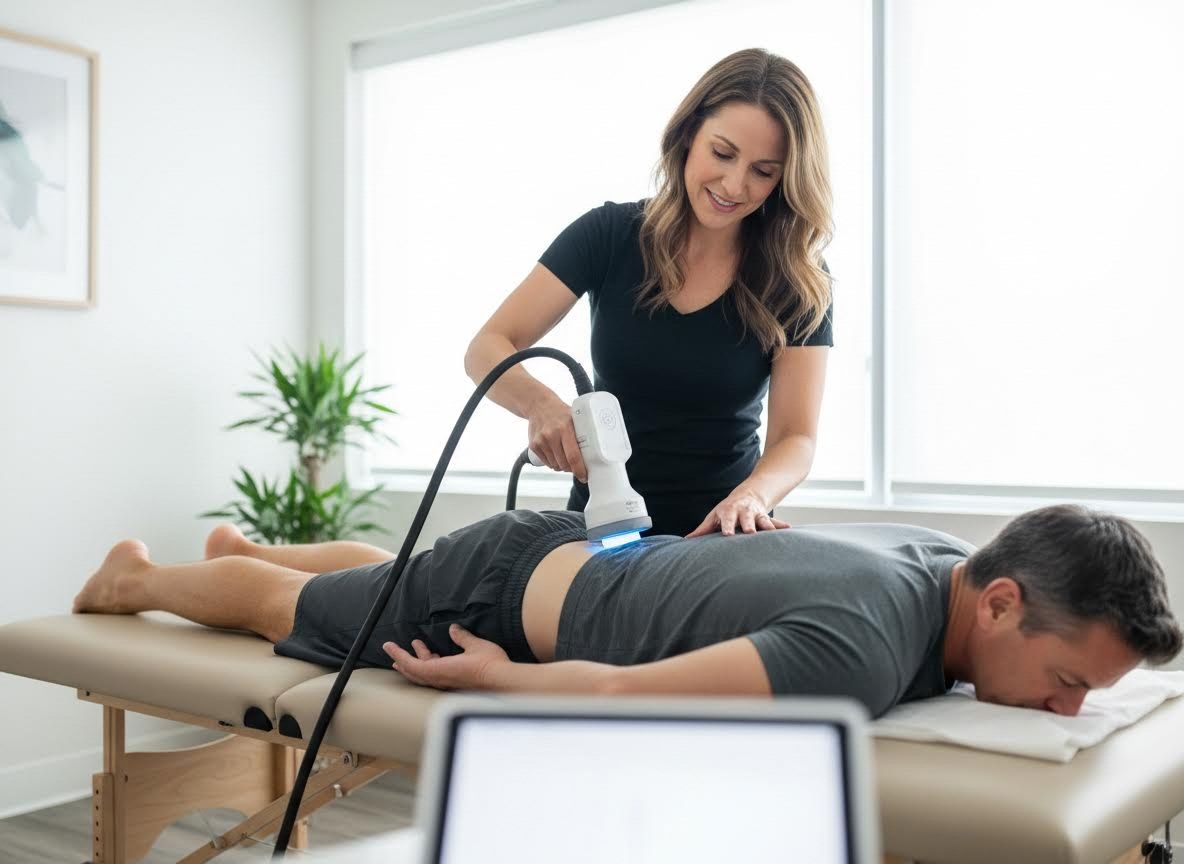
SoftWave Therapy uses acoustic waves delivered through the skin into targeted areas.
These mechanical waves are intended to stimulate biological responses associated with the body's natural repair processes.
Research into extracorporeal shock wave therapy has investigated effects involving:
Local circulation
New blood vessel formation
Collagen remodeling
Cellular activity associated with tissue repair
Pain signaling
Normal inflammatory processes
For appropriate musculoskeletal conditions, SoftWave Therapy may complement exercise-based rehabilitation and other conservative treatments.
Common Sports-Related Problems Evaluated for SoftWave Therapy
Depending on the diagnosis, providers may consider acoustic wave therapy for conditions involving:
Plantar Fasciitis
Common among runners and active adults, persistent heel pain can make training—and even everyday walking—uncomfortable.
Achilles Tendinopathy
Running, sprinting, jumping, and hiking place repeated demands on the Achilles tendon.
Tennis and Golfer's Elbow
Repetitive gripping and swinging can contribute to persistent tendon-related elbow discomfort.
Shoulder Tendon Problems
Weightlifting, swimming, throwing sports, and repetitive overhead movements can place considerable stress on the shoulder.
Patellar Tendon Problems
Running and jumping sports can repeatedly load the tendon around the front of the knee.
Every injury is different, so an evaluation is necessary before determining whether SoftWave Therapy is appropriate.
SoftWave for Runners
Northern Colorado has an incredible running community.
Unfortunately, repetitive mileage can sometimes contribute to overuse problems.
Rather than simply telling runners to stop running indefinitely, a comprehensive treatment strategy may evaluate:
Training volume
Running mechanics
Ankle mobility
Hip strength
Lower-body stability
Recovery
Recent changes in mileage
SoftWave Therapy may then be incorporated into a larger rehabilitation plan when appropriate.
SoftWave for Weightlifters
Strength training places different demands on the body.
Shoulder, elbow, knee, and tendon discomfort can interfere with everything from pressing and pulling to squatting and deadlifting.
The objective of treatment should be more than temporarily reducing discomfort.
A personalized plan can help determine which movements need modification while working toward safely rebuilding strength and training capacity.
SoftWave for Golf and Pickleball
Golf and pickleball continue to attract active adults throughout Northern Colorado.
Both sports involve repetitive movements that can place stress on the elbows, shoulders, hips, knees, and other areas.
Persistent pain doesn't necessarily mean you need to give up your sport. It does mean it's worth understanding what's causing the problem.
What Happens During Treatment?
Your provider begins with an evaluation of your symptoms, medical history, movement, and activity level.
If SoftWave Therapy is appropriate, conductive gel is applied before a handheld applicator delivers acoustic waves to the targeted area.
Treatment is performed in-office and generally requires little interruption to everyday activities.
SoftWave + Rehabilitation
One of the most important parts of sports injury recovery is preparing your body to tolerate activity again.
Depending on your condition, treatment may include:
SoftWave Therapy
Chiropractic care
Strengthening exercises
Mobility work
Progressive loading
Soft tissue techniques
Movement retraining
Training modifications
Gradual return to sport
SoftWave Therapy can support the treatment process, while rehabilitation helps rebuild the strength and function needed for activity.
Don't Just Rest—Build a Return-to-Activity Plan
Rest can be useful during recovery, but eventually the body needs to tolerate movement again.
That's why an effective sports injury plan should answer questions such as:
What caused the problem?
What movements currently aggravate it?
What can you safely continue doing?
What strength or mobility needs to improve?
How should training gradually increase?
The objective is to return to activity confidently rather than repeatedly cycling between pain, rest, and reinjury.
When Should a Sports Injury Be Evaluated?
Consider scheduling an evaluation if:
Pain persists for several weeks
Symptoms return every time you exercise
Your performance has noticeably declined
You've changed your movement because of discomfort
You're avoiding certain exercises
Rest hasn't produced lasting improvement
An old injury keeps returning
Severe pain, significant swelling, deformity, neurological symptoms, inability to bear weight, or symptoms following a serious injury should receive prompt medical attention.
Frequently Asked Questions
Is SoftWave Therapy only for professional athletes?
No. SoftWave Therapy may be considered for recreational athletes, active adults, and other appropriate patients with certain musculoskeletal conditions.
Does treatment require downtime?
SoftWave Therapy doesn't involve surgical recovery. Activity recommendations depend on your specific condition and treatment plan.
Can SoftWave Therapy replace rehabilitation?
Generally, it should be viewed as a potential component of care rather than a replacement for appropriate rehabilitation. Strength, mobility, and progressive loading may remain important depending on the injury.
How many treatments will I need?
Treatment schedules vary according to the condition, medical history, provider's assessment, and response to care.
Sports Injury SoftWave Therapy in Loveland, Colorado
An injury doesn't have to mean the end of your training season.
If you're searching for SoftWave Therapy for sports injuries in Loveland, Colorado, a comprehensive evaluation can help determine what's causing your symptoms and what treatment options may be appropriate.
Whether your goal is returning to running, lifting, golf, pickleball, hiking, cycling, or another activity, your recovery plan should be built around getting you safely back to doing what you enjoy.
Schedule Your SoftWave Consultation
If an injury keeps returning every time you become active again, it's time to find out why.
Schedule a consultation at our Loveland clinic to learn whether SoftWave Therapy may be an appropriate part of your personalized sports recovery program.
Recover smarter. Rebuild stronger. Get back to doing what you love.