
Some injuries seem to stick around long after you expected them to heal.
Maybe your knee still bothers you after an old sports injury. Your shoulder hasn't felt right since you started lifting. Your heel hurts every morning despite months of stretching. Or an old muscle or tendon problem keeps returning whenever you become active again.
When discomfort becomes persistent, it's easy to start accepting it as part of everyday life.
But if you're looking for another conservative option, SoftWave Therapy in Loveland, Colorado may be worth exploring.
At Source Studio, SoftWave Therapy provides a non-invasive treatment approach designed to stimulate the body's natural healing response and support recovery in targeted areas.
Why Do Some Injuries Become Chronic?
The human body has an impressive ability to recover, but healing isn't always straightforward.
Some injuries improve quickly. Others can continue causing discomfort for months or even years.
Persistent musculoskeletal problems may be influenced by factors such as:
Repetitive stress
Overuse
Previous injuries
Tendon irritation
Limited mobility
Continued physical activity
Poor movement patterns
Repeated aggravation of the same area
Sometimes the original injury improves, but the surrounding muscles and joints begin compensating.
Over time, those compensation patterns can create additional discomfort and movement limitations.
What Is SoftWave Therapy?
SoftWave Therapy uses acoustic waves delivered into targeted areas of the body.
These waves are designed to create a biological response within the treatment area, helping stimulate processes associated with the body's natural recovery mechanisms.
SoftWave may be used as part of a conservative treatment plan for certain musculoskeletal injuries and areas of persistent discomfort.
One of the biggest differences between SoftWave and more invasive procedures is simple:
There are no incisions, injections, or anesthesia required.
Going Beyond Temporary Relief
When something hurts, the immediate goal is understandably to make the discomfort stop.
But temporary relief and long-term recovery aren't necessarily the same thing.
SoftWave Therapy takes a different approach.
Instead of simply attempting to mask discomfort, treatment is designed to stimulate biological activity in the targeted tissue and support the body's natural healing response.
Depending on the condition, this may help support circulation, tissue recovery, mobility, and overall function.
What Types of Problems May Be Addressed With SoftWave?
SoftWave Therapy may be considered for a variety of musculoskeletal complaints.
Depending on your individual condition, these may include:
Knee discomfort
Shoulder pain
Plantar fasciitis
Heel pain
Tendon-related problems
Sports injuries
Muscle strains
Joint discomfort
Overuse injuries
Certain chronic soft-tissue problems
Because persistent discomfort can have many different causes, determining what's actually contributing to your symptoms is an important part of developing a treatment plan.
When Rest Isn't Solving the Problem
Rest can be extremely important following an injury.
But what happens when you've already rested?
Maybe you stopped running for several weeks.
Maybe you took time away from the gym.
Maybe you avoided the movements that aggravated your shoulder.
Then you returned to activity—and the same discomfort came right back.
This cycle can be incredibly frustrating.
For some people, the next step is exploring therapies designed to actively support the recovery process rather than continuing the cycle of activity, irritation, rest, and repeat.
SoftWave Therapy may provide another conservative option.
What Happens During a SoftWave Session?
SoftWave treatments are typically straightforward.
Your provider evaluates the area being treated before applying conductive gel to the skin.
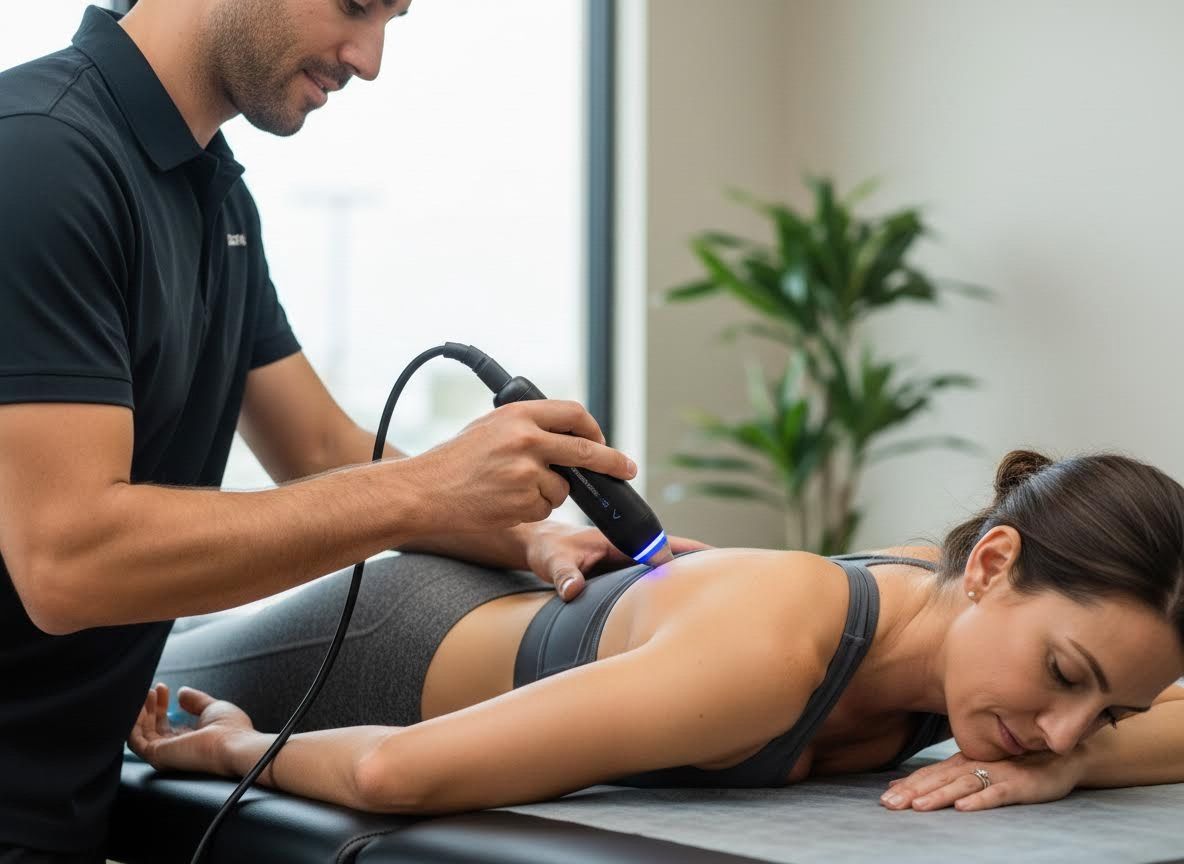
A handheld SoftWave applicator is then moved across the treatment area while acoustic waves are delivered into the tissue.
Patients commonly describe the sensation as tapping or pulsing.
Certain locations may feel more sensitive, particularly around irritated tissue.
Treatment intensity can be adjusted according to your comfort and response.
Quick Treatment With Minimal Disruption
One reason SoftWave Therapy appeals to active and busy patients is that appointments don't typically require a major interruption to their schedules.
SoftWave sessions at Source Studio generally take approximately 10–15 minutes.
There is typically no required downtime following treatment.
That means many patients can receive treatment without having to put their entire day—or week—on hold.
How Many SoftWave Sessions Will You Need?
There isn't a universal answer.
A recent injury may require a different approach than something that has been bothering you for several years.
Your recommended treatment plan can depend on:
The area being treated
How long symptoms have been present
The type of injury
Your activity level
Your overall health
Your individual response to treatment
That's why an evaluation is important before beginning care.
An Option for Active Northern Colorado Lifestyles
Living in Northern Colorado often means staying active.
Hiking, skiing, cycling, running, weightlifting, golf, recreational sports, and outdoor activities are a major part of life for many people throughout Loveland and the surrounding communities.
Persistent discomfort can gradually make those activities harder.
You may begin modifying workouts, skipping hikes, avoiding certain exercises, or simply doing less because you're worried about aggravating an old injury.
The objective of treatment isn't just addressing how you feel while sitting in the treatment room.
It's helping you work toward returning to the activities that matter to you.
An Integrative Approach at Source Studio
SoftWave Therapy doesn't necessarily have to be used by itself.
At Source Studio, your provider can evaluate your individual needs and determine whether combining different approaches may be appropriate.
Depending on your situation, your care plan may incorporate services such as chiropractic care, massage therapy, acupuncture, or other wellness services alongside SoftWave Therapy.
This allows treatment to focus not only on the area causing discomfort but also on overall movement and function.
Stop Letting an Old Injury Control Your Routine
It's easy to adapt your life around persistent discomfort without realizing how much you've changed.
You stop doing certain exercises.
You take the elevator instead of the stairs.
You skip the weekend hike.
You avoid sleeping on one side.
You tell yourself you'll deal with it eventually.
If an old injury continues interfering with your normal routine, it may be time to explore another approach.
Discover SoftWave Therapy in Loveland, Colorado
SoftWave Therapy provides a non-invasive treatment option designed to stimulate the body's natural healing response and support recovery in targeted areas.
If you've been dealing with a stubborn injury or persistent musculoskeletal discomfort, Source Studio can evaluate your condition and help determine whether SoftWave Therapy may be appropriate for you.
Schedule Your SoftWave Consultation
Don't let an injury from months—or years—ago continue deciding what you can and can't do today.
Schedule a consultation with Source Studio in Loveland, Colorado and find out whether SoftWave Therapy could be the next step in your recovery.
Recover better. Move better. Get back to living actively.